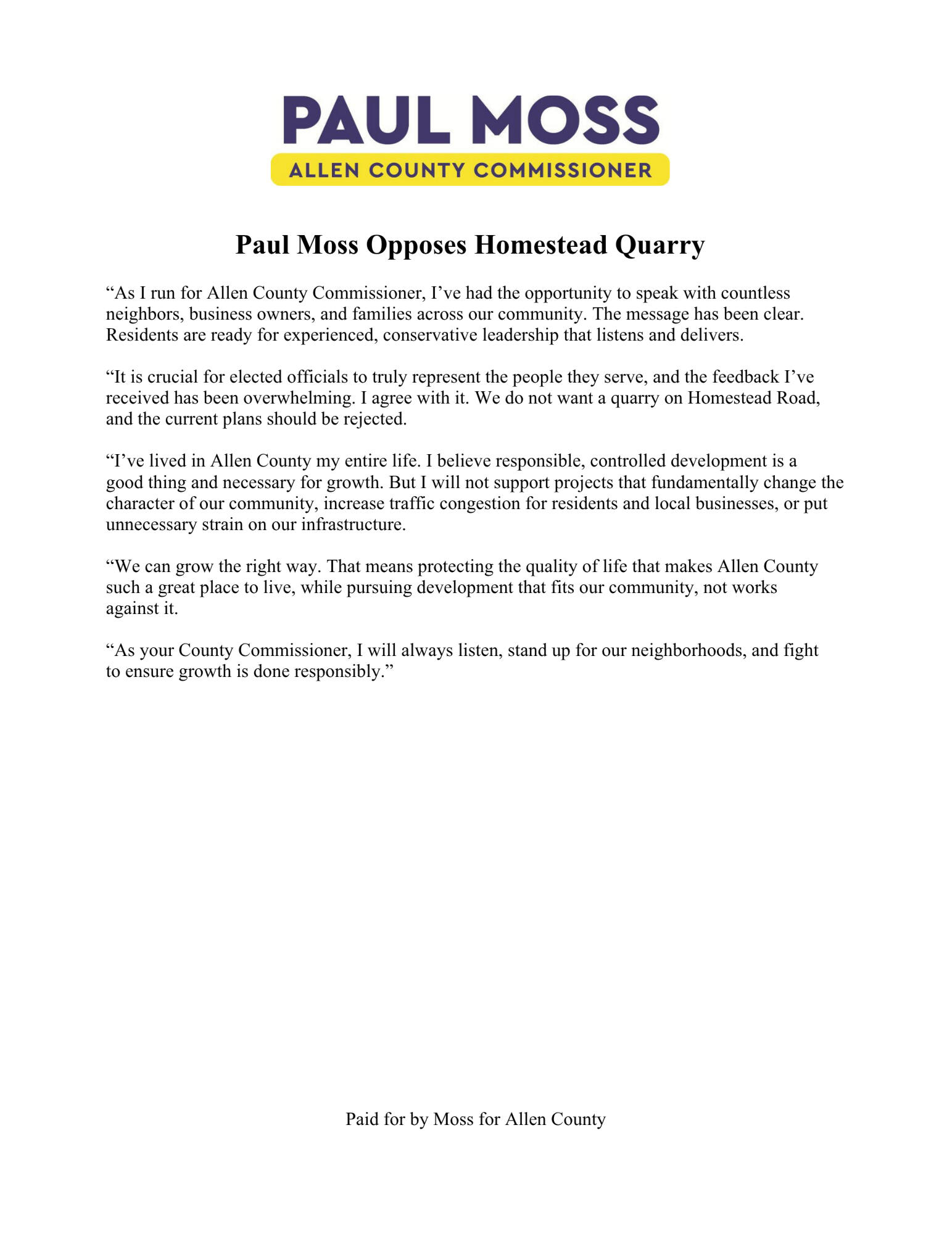
Fredrick, Dennis, and Hardy make money and leave our town holding the bag.
No Strip Mine in Aboite
Let Our Commissioners Hear your Thoughts:
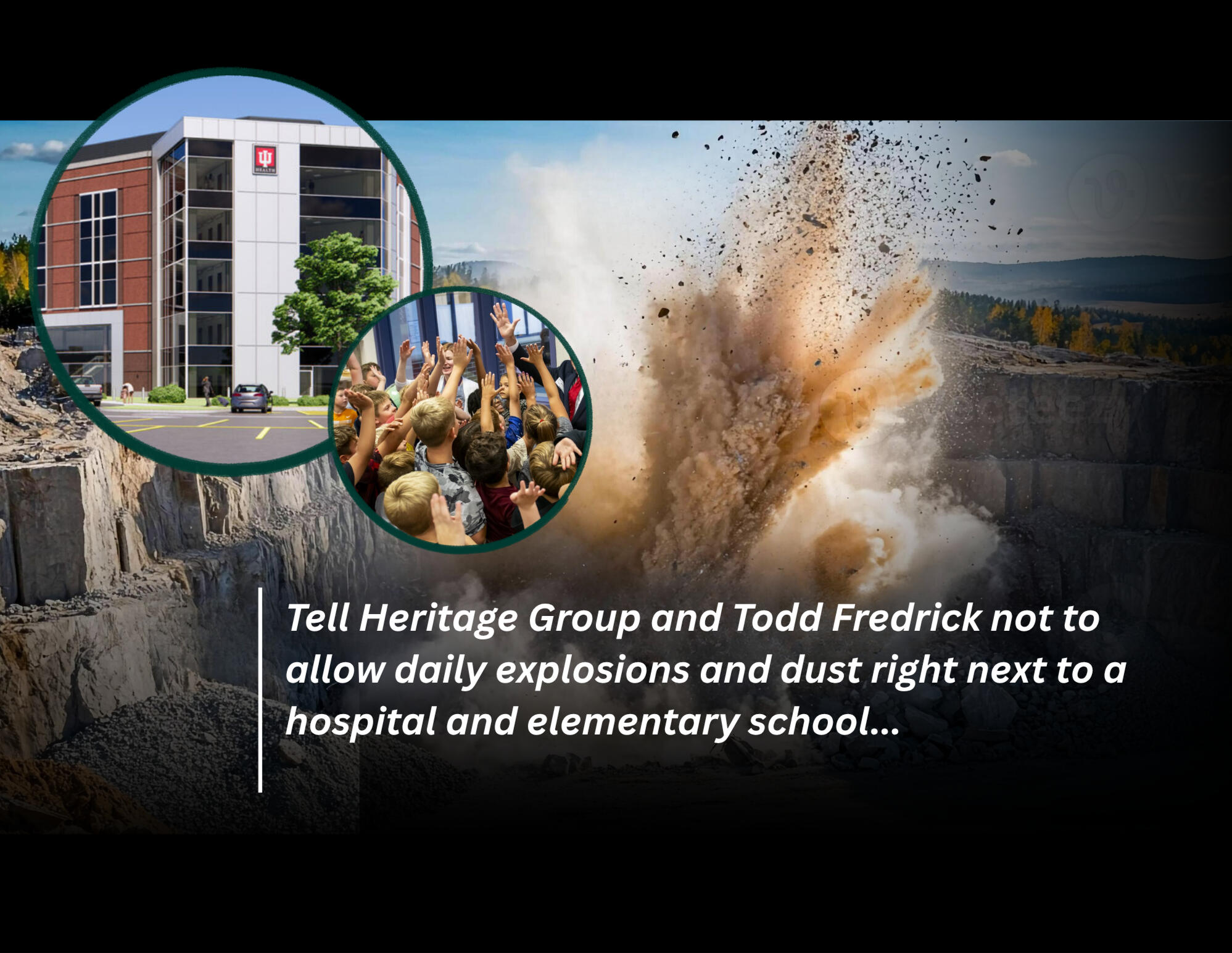
Join us in the fight against the strip mine set to be dug in the Little River floodplain valley of Indiana - south of highway 24, north of Ernst Road, west of I-69, and east of Aboite Road in Allen County.Our neighbors, Milton Dennis, Peggy Dennis, Paul Hardy, and Patsey Hardy might sell 1,600 acres to Todd Fredrick & Heritage Group, an Indianapolis company run by Geoff Dillan that is considering stripping our resources and destroying our home values. This will be done by blasting mere yards away from Lafayette Meadows Elementary School and IU Health Hospital.If you own property within twenty miles of this mine, your property values are at risk. This would include Sycamore Hills, Devil’s Hollow, all subdivisions on Aboite, Covington, all the way to Roanoke. Proximity of 0-4 miles to active or proposed quarries consistently reduces nearby residential property values by 25–95%. These are most pronounced in residential/rural settings and persist decades due to irreversible nuisances. Mitigation (setbacks, monitoring) can lessen but rarely eliminates capitalization into lower values. Potential damage to SWAC real estate exceeds $1.2bn.Once the strip mine is dug, the scarred landscape, degraded water resources, and diminished quality of life will remain for decades, far outweighing any short-term economic promises. Our community deserves better—clean air, safe water, productive land, and a healthy future for our families.

Do you want your property value to drop by 30%? Help us fight it by donating here. Don’t let Indianapolis profiteers destroy our neighborhood so they can make a quick buck! They don’t care about our children, our schools, our churches, our hospitals. Amy M. ‘Fehsenfeld’ Schumacher, CEO of Heritage, her dad, Fred Fehsenfeld, and the rest of their God-forsaken family, don’t live here and don’t care about our town. They plan to take our limestone, rail it out, sell it, and spend the money on their mansions in Indianapolis and their vacation homes in Florida.
Email Amy ([email protected]) and give her a piece of your mind.Hoosiers don’t sell their neighbors out!
Read about the fight in the news:
Land and Water Damage
In karst terrain (characterized by sinkholes, caves, and direct underground water flow—prevalent in parts of Indiana), strip mines cause severe disruption:Dewatering pumps out groundwater, creating large “cones of depression” that can lower water tables by 60–80 feet even a half-mile away. This dries up springs, wetlands, and perennial streams, reverses natural flow directions, and triggers sinkhole collapses. Blasting opens new pathways for contaminants, spiking turbidity (cloudiness) in springs and aquifers far beyond normal levels. In monitored cases, this has diverted up to 90% of a groundwater basin’s flow into the pit and raised downstream water temperatures, harming aquatic life. Sediment runoff and chemical leaching from blasts pollute surface and groundwater, with risks of permanent contamination in fragile karst systems where pollutants move quickly without natural filtration.These changes scar productive farmland or natural landscapes into barren pits, with effects that can last decades or permanently alter local hydrology and ecosystems.
Health Risks
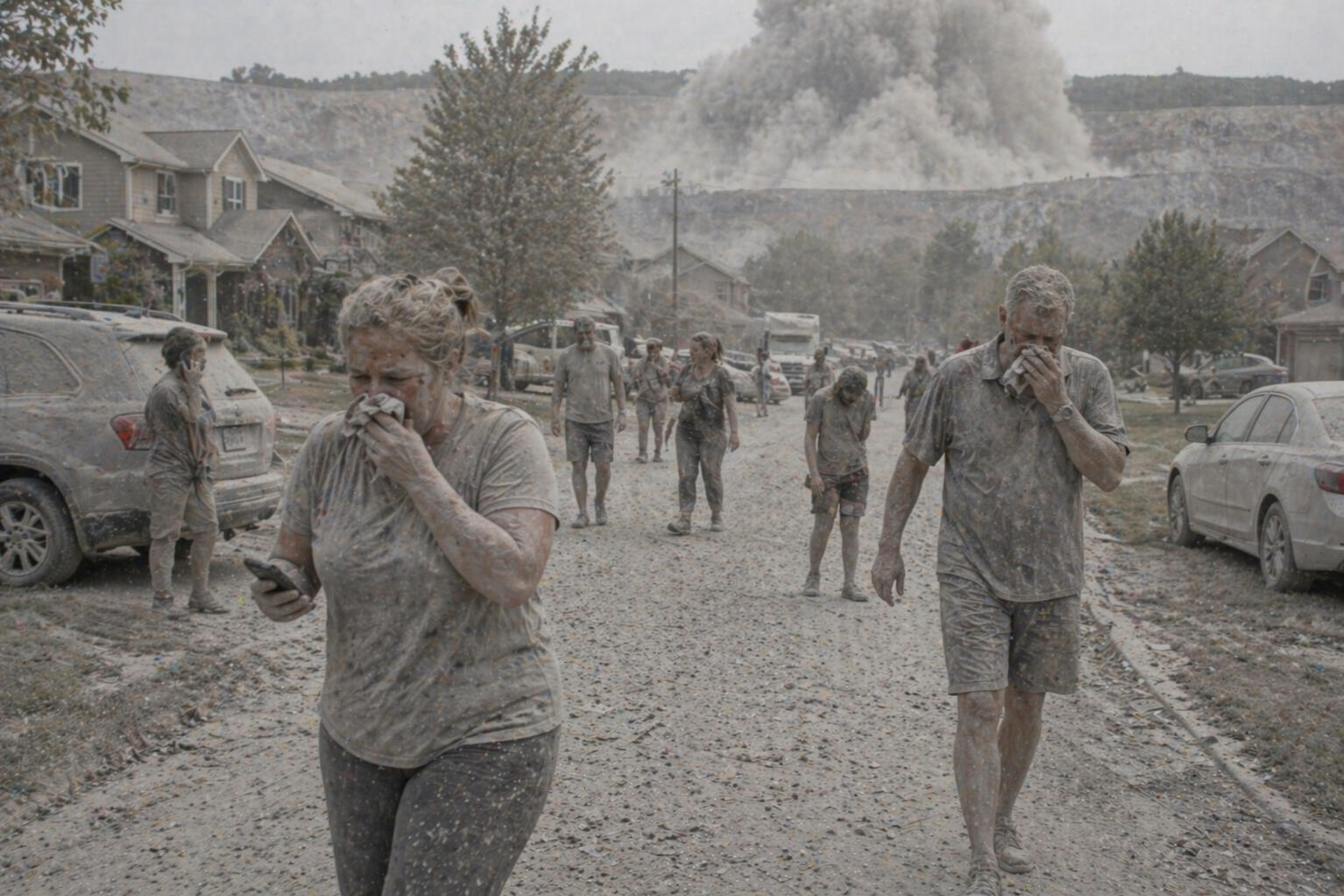
Strip mine operations generate significant airborne dust (including fine silica particles) from blasting, crushing, and truck traffic. Residents nearby often face higher rates of respiratory issues, such as worsened asthma, chronic bronchitis, reduced lung function, and other breathing problems—effects shown in studies of communities living close them. Blasting also releases chemical contaminants and fine particles that can affect air quality. These invisible threats don’t stay contained; dust and pollutants spread into homes, schools, and daily life, posing risks especially to children, the elderly, and those with pre-existing conditions.
Community and Economic Detriments
Daily operations bring constant heavy truck traffic (often 100+ semis), noise from blasting and machinery, vibration, and light pollution from 24/7 activity. Blasting creates ground vibrations and airblast that residents feel as shaking, rattling windows, and structural stress—potentially leading to cosmetic cracks in homes over time.Property values near active or proposed strip mines frequently drop significantly (studies show reductions ranging from 14–40% or more depending on proximity, due to noise, dust, traffic, visual blight, and water concerns). These losses can persist for decades and affect hundreds of homes, representing major economic harm to families and the local tax base.Depending on the wind, air quality for our children could be infected all the way to Roanoke & Sycamore Hills. A Homestead quarry will certainly damage real estate values 10, even 15 miles away. This would include Sycamore Hills, Devil’s Hollow, all subdivisions on Aboite, Covington, all the way to Roanoke. Dewatering caused by the massive quarry hole would be downstream of The Aboite Watershed, which could dry up your creek, your wells, your land, even affect the foundation of your home. Most importantly, no one will want to live here, interested home buyers will disappear, jobs will dry-up, schools & churches will close, businesses will close. The negative impact would be massive.Once dug, the strip mine irreversibly changes the character of a peaceful rural or small-city area like ours, with impacts that are hard to fully mitigate.
Permanent Property Devaluation
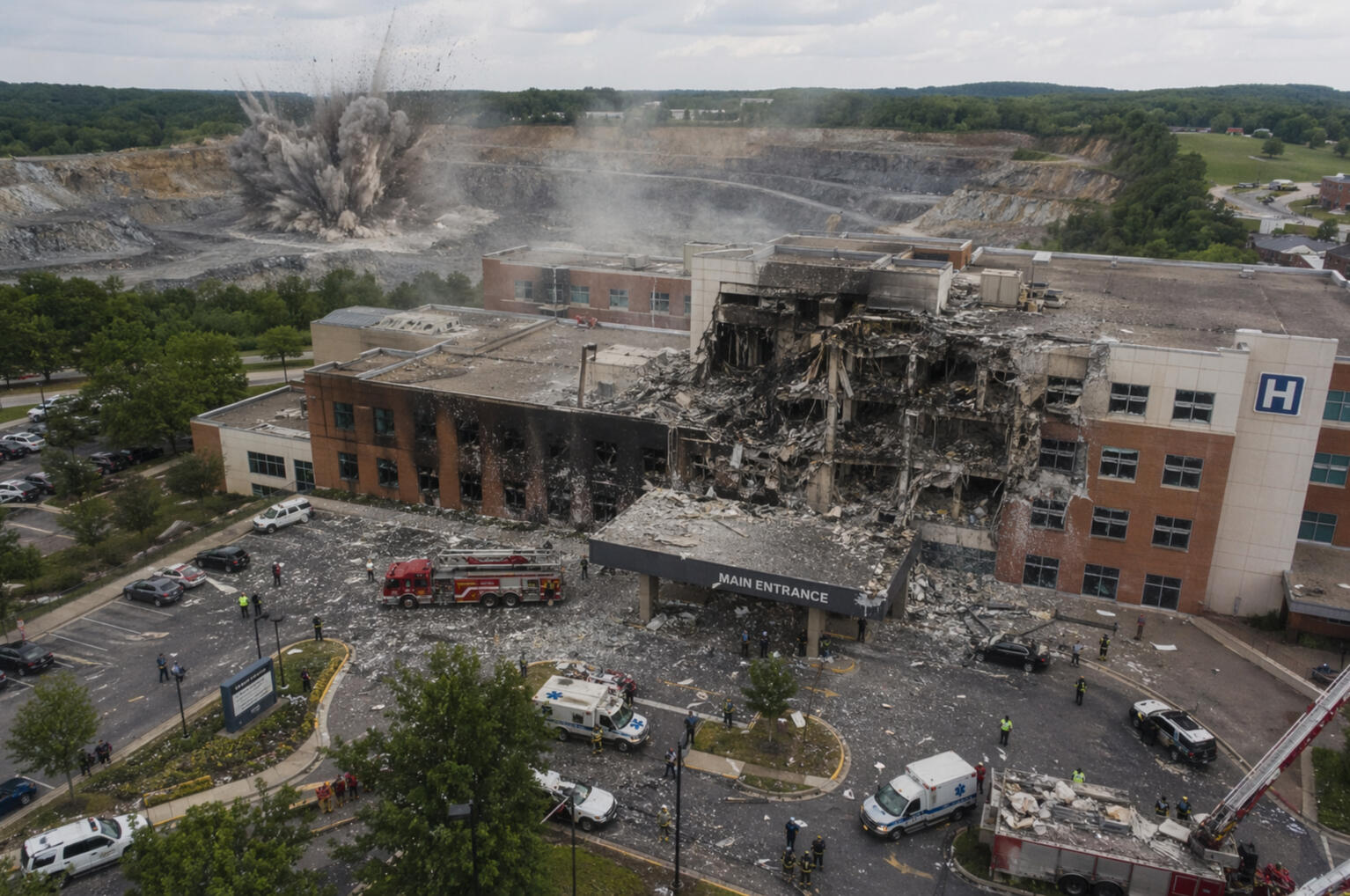
Blasting Noise & Vibration: Market Value Reduction = 25-40%Repeated blasts (noise, airblast, ground vibration often 0.5–5 Hz) cause structural cracks, foundation damage. Courts have deducted 25% from land/improvements aquifer/well damage and class-action settlements up to $50 million. Cumulative low-level vibrations have a 95% damage probability over 5-15 years.Truck/Train Noise & Traffic Congestion: Market Value Reduction = 14.5–20%Heavy-haul traffic (100+ semis and off-highway haul trucks) and associated dust/noise from railroad activity / loading.Light Pollution: Market Value Reduction = 8-10%Floodlights and 24/7 activity create visual/nuisance.Waterway and Water Supply Damage: Market Value Reduction = 4-12%Dewatering, contamination, or blasting effects lowered water tables, sediment runoff, or nitrate/chemical leaching from blasts contaminate wells.Air Pollution & Visual Blight: Market Value Reduction = 13-20%Dust deposition, bare pits, and landscape degradation.
Quarries are Deathtraps – the Recent Body Count

Statement from Southwest Allen County's next commisioner: